
- Home
- About Us
- Referrals
- Disability Support Services
- Albinism Support
- Arthritis Support
- Anxiety Support
- Autism
- Bipolar Support
- Brain Injury Support
- Cerebral Palsy Support
- Depression Support
- Down Syndrome Support
- Physical Impairment Support
- Genetic Condition Support
- Multiple Sclerosis
- NDIS Huntingtons Support
- NDIS Mental Illness Support
- Neurological Disability Support
- Motor Neurone Disease Support
- Muscular Dystrophy Support
- NDIS Palliative Support
- NDIS Parkinson’s Disease Support
- PTSD Support
- Rheumatoid Arthritis Support
- NDIS Stroke Support
- Core Supports
- Supported Independent Living
- Find Your Support Worker
- NDIS Services
- Locations
- Careers
- News
- Contact Us
- Disability Support
- Anxiety Support
- Autism Support
- Brain Injury Rehabilitation
- Bipolar Support
- Cerebral Palsy Support
- Depression Support
- Down Syndrome Support
- Genetic Condition Support
- NDIS Huntingtons Support
- NDIS Mental Illness Support
- Motor Neurone Disease Support
- Muscular Dystrophy Support
- NDIS Parkinson’s Disease Support
- Physical Impairment Support
- PTSD Support
- Rheumatoid Arthritis Support
- NDIS Stroke Support
- NDIS Visual Impairment
- Psychosocial Disability Support
- Intellectual Disability Support
- Neurological Disability Support
- ADHD Support
- Core Supports
- Supported Independent Living
- NDIS Services
- Locations
- Why Maple
- Home
- About Us
- Referrals
- Disability Support Services
- Albinism Support
- Arthritis Support
- Anxiety Support
- Autism
- Bipolar Support
- Brain Injury Support
- Cerebral Palsy Support
- Depression Support
- Down Syndrome Support
- Physical Impairment Support
- Genetic Condition Support
- Multiple Sclerosis
- NDIS Huntingtons Support
- NDIS Mental Illness Support
- Neurological Disability Support
- Motor Neurone Disease Support
- Muscular Dystrophy Support
- NDIS Palliative Support
- NDIS Parkinson’s Disease Support
- PTSD Support
- Rheumatoid Arthritis Support
- NDIS Stroke Support
- Core Supports
- Supported Independent Living
- Find Your Support Worker
- NDIS Services
- Locations
- Careers
- News
- Contact Us
NDIS
Down Syndrome Support Services
We provide compassionate NDIS-funded care and financial support for Down Syndrome to help individuals achieve greater independence and improve their quality of life.
Maple Community Services prioritises getting to know you to identify and achieve your goals. We help you set a course for greater independence with reliable support. There is no better NDIS provider than Maple Community Services in supporting patients with Down Syndrome
Down Syndrome can be a debilitating illness and limit one’s abilities to participate in everyday activities. If you or your loved one are affected by Down Syndrome, our Support Workers are highly skilled and trained to provide the assistance needed to live your life to the fullest.
Our extensive experience, capacity for 24/7 support, and community spirit set us apart when it comes to Down Syndrome support services. Our strong family values and friendly staff give you and your loved ones peace of mind and exceptional support to pursue a happy, fulfilling, and independent life.
Are you or a loved one eligible for NDIS funding?
Trusted NDIS Registered Specialists
8,000+
Happy participants supported
10+ Years
Delivering
NDIS Services
50+
Languages to make
you feel at home
24/7
Support and
same day booking
Why choose Maple
for Down Syndrome Support Services
Everyone's NDIS Journey looks different.
Find Down Syndrome support that works for you.
Choose the right partner, not a provider.
1
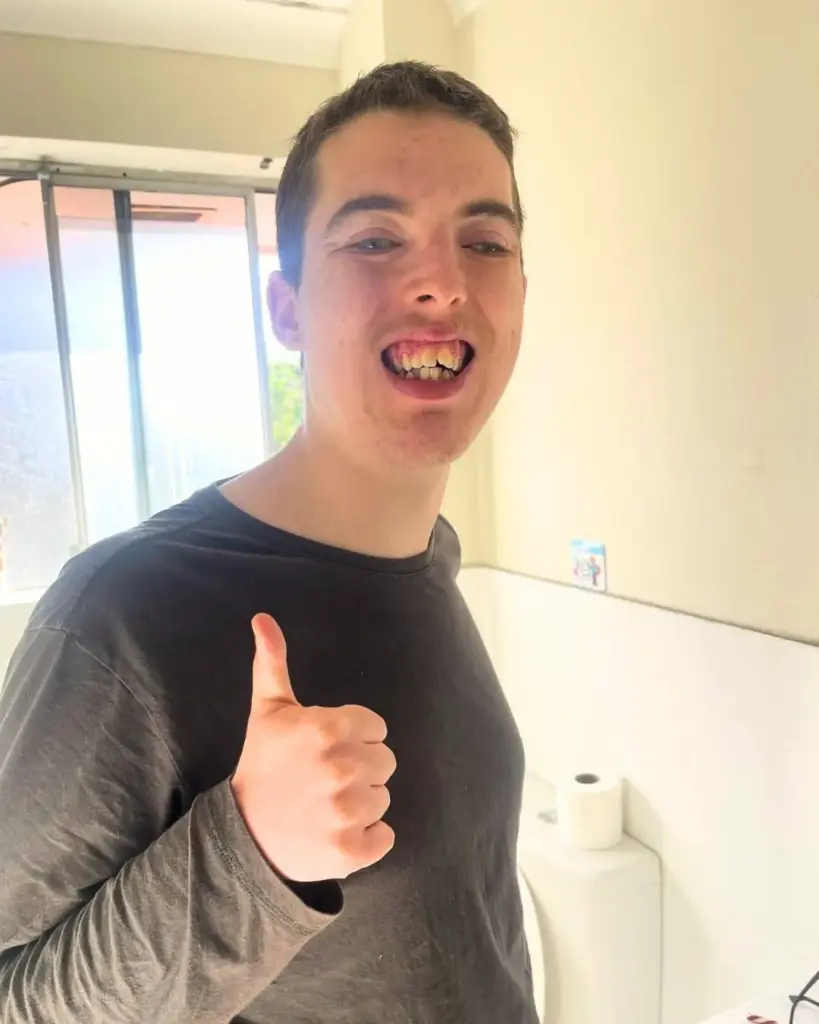
I am an NDIS Participant
I want independence, choice, and a team that knows my name
2
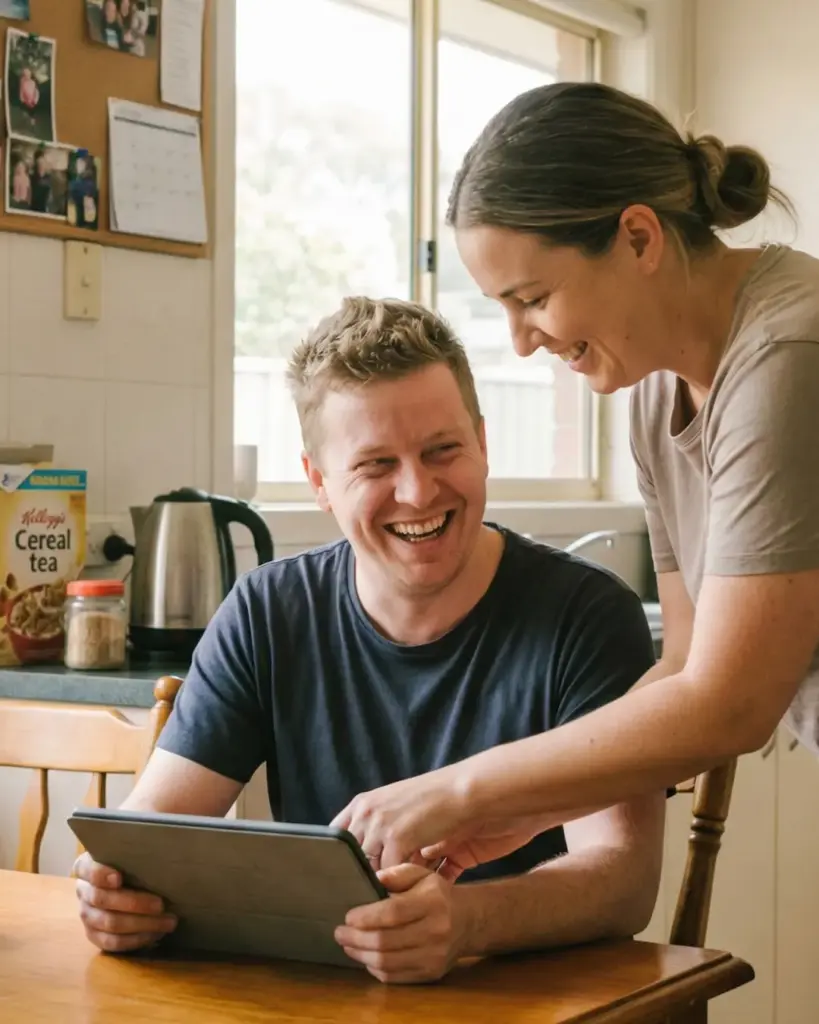
I am a Family / Carer
I need a trusted partner to share the load and provide peace of mind
3
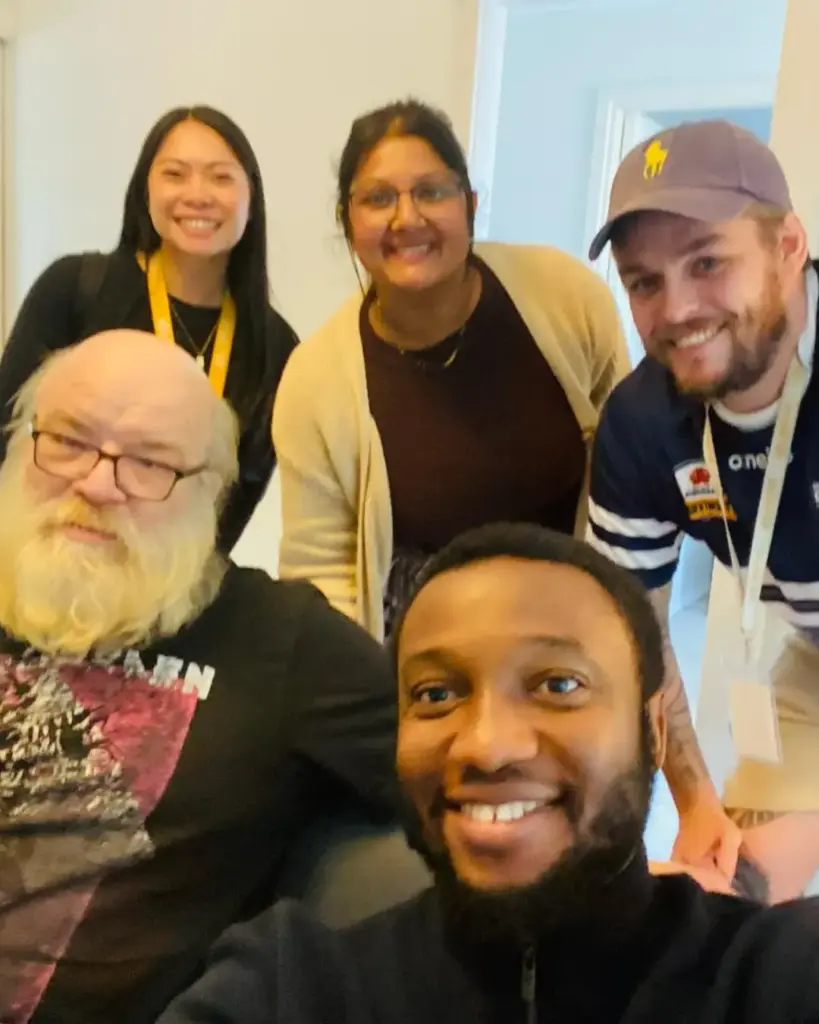
I am a Support Coordinator
I need a responsive partner for everyday support and complex, high-need referrals
Who Can We Help?
We provide Down syndrome support for individuals and families at every stage, with services tailored to real needs, routines, and goals.
- Children with Down Syndrome
Building early skills, supporting development, and creating positive daily routines at home, school, and in the community. - Teenagers and Young Adults
Supporting independence, social confidence, emotional regulation, and life skills as they transition into adulthood. - Adults with Down Syndrome Ongoing, consistent support to live independently, maintain routines, access the community, and achieve personal goals.
- Families and Carers
Providing reliable support, guidance, and respite so you can feel confident your loved one is in the right hands. - Participants with High or Complex Needs
Experienced support workers trained to manage behaviours of concern, sensory needs, and complex care requirements for people with Down Syndrome. - NDIS Participants Seeking the Right Fit
Matching you with support workers who understand your preferences, communication style, and cultural background.
No matter where you are in your journey, our support is designed to feel consistent, personalised, and right for you.
What Our Clients Are Saying
Maple’s workers are hyper-aware of sensory overload. They know the subtle signs when our son is getting overwhelmed in crowds, so they naturally change it up with a quiet activity before a meltdown happens.
PattyParent 
Due to low muscle tone, our daughter gets tired really easily during community trips. Maple’s team paces her activities well and balances her outings with rest so she doesn’t feel too drained.
SandraParent 
Our son understands everything, but struggles with verbal speech. Maple’s workers take the time to really listen and process what he says. They even use visual checklists so he can direct his own day.
LiamParent 
Find your Perfect Support Worker
Take our quiz to find your perfect Down syndrome support worker – takes 2 minutes for your perfect match.
Find your perfect support worker match
Answer 7 quick questions. We'll show you who we think would be a great fit.
It only takes 2 minutes.
🔒 Your answers are private · No commitment needed
Step 1 of 7
First up — who are we finding a support worker for?
👤
Myself
👨👩👧
My family member
👤
My client We'll tailor this for coordinators
What kind of support are you looking for?
You can pick up to 3.
🏠Help at home
🤲Personal care
🧠Complex or high-intensity care
🚌Getting out in the community
🧩Autism or behaviour support
💊Mental health support
🏥Medical or clinical care
🧓Aged or disability support
🏡Supported Independent Living (SIL)
📋Something else
Does speaking the same language matter to you?
Yes, it's really important to me
It would be nice but not essential
Not important to me
Are there any cultural or religious practices your support worker should know about?
Things like dietary needs, prayer times, or family traditions — these matter to us.
Yes, this is important to me
A little — I'll share more later
Not important for me right now
Do you have a preference for the gender of your support worker?
Especially for personal care, this is completely your choice.
Female support worker preferred
Male support worker preferred
No preference
What kind of person do you want your support worker to be?
Think about who you'd actually enjoy spending time with. Pick up to 3.
😊Warm and chatty
🤝Calm and reassuring
💪Motivating and energetic
🎯Focused and professional
🎮Shares my interests
🌱Patient and gentle
🔬Experienced and skilled
Where are you located?
We'll check if we have workers available in your area.
We may still be able to help — get in touch.
Contact UsLooking at your answers...
Finding support workers who match your needs...
We've found some great options for you.
Great news — we've found the perfect support workers for you
Your matches are ready. Enter your details to see who we think would be a great fit.
👤
Sarah M.
Support Worker8 yrs experience
Parramatta, NSW
Personal Care & Community Access
EnglishArabic
🔒
👤
James T.
Support Worker5 yrs experience
Blacktown, NSW
Mental Health & Daily Living
EnglishHindi
🔒
👤
Linh P.
Support Worker6 yrs experience
Liverpool, NSW
Autism Support & SIL
EnglishVietnamese
🔒
Unlock your matches + get a free guide on how to choose the right NDIS support worker to achieve your goals
✅
You're on your way. We've sent your guide and match summary to . One of our team will be in touch shortly to talk through your options — no pressure, just a friendly chat.
Explore our support services →
🏆
96% Support worker retention
The lowest turnover in the industry
🌏
50+ languages spoken
By our team
🤝
8,000+ families supported
Across Australia
📞
24/7 real-person support
Never a bot
What Does Our
Down Syndrome Support Involve?

Personal Care
At Maple, Support Workers assist with daily routines like personal hygiene, meals, and appointments. We help you or your loved one live more independently, at home or in shared living.

Household Tasks
Our goal is to make daily living easier and more manageable for people with Down syndrome. We support everyday tasks like cleaning, meal preparation, shopping, and more.

Travel and Transport
Get where you need to go with confidence and ease. We provide safe and reliable transport to appointments, school, and community activities.
Garden Maintenance
Enjoy a well-maintained home without the stress of upkeep. We take care of gardening tasks to keep your outdoor space clean and tidy.
Community Participation
We can assist you or your loved one in accessing and participating in the wider community. We guide, support, mentor, and motivate individuals to succeed and reach set goals for social interaction and recreation.

Development – Life Skills
We help build essential life skills to support independence and confidence. This includes personal care, organisation, and daily living routines.
How much funding can you get from NDIS?
How to Get Started with Maple
Step 1
Reach out
Send us a message or give us a call. We are here to listen.
Step 3
We Find the Right Fit
Our team matches you with the right support and people who suit you best.
Step 2
Tell Us About You
We will have a relaxed chat to understand your needs, goals, and what matters most to you.
Step 4
Start Your Journey
We set everything up so you can begin with confidence, knowing you are supported every step of the way.
How Maple Community compares
| Why Maple is Different |

|
Other |
|---|---|---|
Care That Speaks Your Language80% CALD workforce, 50+ languages spoken, support worker matching |
✓ | ✕ |
500+ Support Workers and Registered Nurses Ready*Immediate support, no more waiting for weeks |
✓ | ✕ |
96% Support Worker Retention vs 78% Industry AverageSame support team, real and long-term relationships |
✓ | ✕ |
Dedicated Relationship ContactOne caseworker, direct mobile and email access |
✓ | ✕ |
Supported Independent Living Placement Within 24 Hours*A smooth, supported process to make you feel at home |
✓ | ✕ |
Referral Acknowledged Within 2 HoursImmediate confirmation, never waiting in the dark |
✓ | ✕ |
Expertise in Complex & High-Needs CareSpecialists in HIDPA, psychosocial and medical cases |
✓ | ✕ |
24/7 Real Person Support LineCall any time and speak to a real person |
✓ | ✕ |
Built-In Escalation PathwaysDirect access when urgent issues arise |
✓ | ✕ |
Reporting You Can Count OnNo chasing and no documentation gaps |
✓ | ✕ |
Stable Provider for Every Stage of Your NDIS Journey10+ years of stable NDIS delivery across Australia |
✓ | ✕ |
10,000+ goals achieved hear from our community.
How We Can Help You
Core Supports
Supports that enable patients to complete activities of daily living, working towards the individual’s goals, and meeting defined objectives.
Support Coordination
We help you identify, coordinate, and access support services for Down Syndrome and disability service providers on your or your loved one’s behalf.
Plan Management
Maple Community Services manages the funding in your NDIS Plan. We are the connection between you or your loved one, providers, and the NDIA.
Accommodation
With supervised independent living, assistance and/or supervision of daily tasks can be provided to help people with Down Syndrome live as independently as possible.
Are you looking for a Supported Independent Living?
Our SIL vacancies span shared homes and individual options across NSW, VIC, QLD, and WA.
We service all suburbs across Sydney and other key cities across Australia
- Sydney
- Melbourne
- Brisbane
- Gold Coast
- Perth
- Orange
- Bathurst
- Dubbo
- Central Coast
- Wollongong
- Sunshine Coast
- Geelong
- Sydney
- Melbourne
- Brisbane
- Gold Coast
- Perth
- Orange
- Bathurst
- Dubbo
- Central Coast
- Wollongong
- Sunshine Coast
- Geelong
Enquire Today
Whether its a query about the services we provide, or just a general enquiry, we would love to hear from you!
Learn more about Down Syndrome
Your Questions, Answered
Can I use my existing NDIS plan with Maple Community Services?
Absolutely. Whether your NDIS plan is Self-Managed, Plan-Managed, or NDIA-Managed, Maple Community Services is a registered NDIS provider equipped to deliver services under your existing arrangements without delay.
How does Maple support skill development and independence for participants with Down Syndrome?
Dedicated support workers work side-by-side with participants on practical routines, including managing personal care and home cooking, mastering money management and budgeting, and navigating local communities safely using public transport.
Apart from practical tasks, the focus extends to fostering strong communication habits and encouraging social engagement, ensuring participants gain both the practical tools and social confidence needed to live more independent lives.
What accommodation options does Maple offer for people with Down Syndrome looking to live independently?
Maple Community Services offers flexible, tailored housing solutions to suit varying levels of independent living preferences for individuals with Down Syndrome.
For those seeking round-the-clock care, Supported Independent Living (SIL) provides 24/7 assistance in shared or individual home settings across major locations in NSW, QLD, WA, VIC, and NT.
Additionally, Maple provides Individualised Living Options (ILO) for completely customised living arrangements designed around a participant’s specific routines and choices, as well as Short Term Accommodation (STA) and Respite stays that engage participants in structured social activities while giving primary carers a well-deserved break.
What sets Maple Community Services apart from other Down Syndrome Support Providers?
Maple is a participant-first mindset rooted in strong family values. Rather than relying on rigid, one-size-fits-all solutions, Maple delivers customised care plans that evolve alongside an individual’s changing goals over time.
Participants benefit from 24/7 support capacity tailored to handle complex needs or emergency situations, alongside a multicultural team across NSW, QLD, WA, VIC, and NT that delivers culturally sensitive care. To ensure meaningful connections, Maple thoughtfully pairs participants with support workers based on shared interests, personality compatibility, and specific support requirements.
What are the skills & qualifications of Maple’s Down Syndrome Support Workers?
Our Support Workers for Down Syndrome have studied and trained diligently to understand and respond to the needs of people with Down Syndrome. You can feel confident and at ease with our Down Syndrome Support Workers’ exceptional skills and qualifications. We pride ourselves on our years of experience providing Down Syndrome Support.
You’ll partner with a highly qualified Down Syndrome Specialist in Sydney, or across Australia, to improve your or your loved one’s life and enhance your overall well-being. Our specialists have targeted expertise to provide treatment for people with disabilities.
Our Down Syndrome Support Workers have training and experience in all aspects of Down Syndrome Support, from special programmes for young children to occupational supports for adults with Down Syndrome. We utilise specialised tools and technologies to work with children, including those who have speech disorders.
Why choose Maple for Down Syndrome Support?
Maple has everything you or your loved one needs in Down Syndrome Support! What makes us different?
Maple Community Services is a family-owned and operated business that has rapidly grown from our origins in Western Sydney to delivering supports nationwide. Our point of difference, for us, it is all about real-life connections. We are committed to serving our community the way we know they like; and our Customer Service model reflects this to a T. Talk to a real person in real time; get real-life support, in-the-moment solutions, and 24/7 responses.
We tailor our services to meet your or your loved one’s unique needs. We specialise in providing support for people from diverse backgrounds, language groups, and cultures, as well as people with criminal convictions, mental health problems, and complex disability support needs.
What is Down Syndrome?
Down Syndrome, also known as Trisomy 21, occurs when a baby is born with an extra Chromosome 21 or an extra part of Chromosome 21. This is usually caused by an error in cell division during gestation and alters the course of development, resulting in the characteristics commonly associated with Down Syndrome. People with Down Syndrome may have differing levels of disability depending on the extent of the genetic mutation.
This additional chromosome can cause differing levels of intellectual disability, as well as a number of physical and developmental malformations, and a predisposition for other chronic illnesses. The common physical traits of Down Syndrome include low muscle tone, small stature, an upward slant to the eyes, and a single deep crease across the centre of the palm. Each individual with Down Syndrome is unique and may possess any one of these characteristics to a certain degree or not at all.
What are the 3 Types of Down Syndrome?
Trisomy 21 is the most common type of Down Syndrome, with every cell in the body having three copies of chromosome 21 instead of two.
Translocation Down Syndrome is where each cell has part of an extra chromosome 21 or a whole extra one. It is attached to another chromosome instead of being on its own.
Mosaic Down Syndrome is the rarest type, and only some cells have an extra chromosome 21.
Is Down Syndrome Covered by the NDIS?
Yes! If you or your loved one lives with Down Syndrome, it is covered under the National Disability Insurance Scheme (NDIS), and you may be eligible for their funding for our support services.
People (over the age of 7 years old) living with Down Syndrome are not automatically eligible for NDIS funding. You need to complete an access request form and provide evidence of the impact of your disability on your everyday functioning. Nevertheless, almost all people with Down Syndrome are accepted into the NDIS.
At Maple, we can assist you in the assessment process to see if you or your loved one qualifies for NDIS Down Syndrome benefits. If you or your loved one meets the criteria, we can provide comprehensive services to enhance your quality of life.
What Can NDIS Fund for Down Syndrome?
The NDIS funds several critical services for people with Down Syndrome. These include speech and occupational therapy, physiotherapy, personal care support, community access support, nutritional support, skill development, transport, household tasks, and behavioural support.
NDIS funding can also provide sensory toys, holiday camps, or pay for a Support Worker to assist you or your loved one at home. Plan Management and Support Coordination Funding are almost always offered to NDIS Participants when they receive their plan. The types and amounts of funding available are determined in part by the level of severity.
For children younger than seven years of age, NDIS provides funding for early interventions, takes a family-centred approach, and helps families connect with Down Syndrome Services Providers. At Maple, we can assist you or your loved one with the NDIS application to receive your or your loved one’s needed financial support.
Will NDIS pay for Down Syndrome assessment?
NDIS provides access to independent assessments for children and adults with Down Syndrome to determine their level of functioning. Rather than focusing on diagnosis, these Down Syndrome assessments are designed to determine the severity of your or your loved one’s disability and level of functioning in everyday life. Talk to a Down Syndrome Support Worker today for more information.
What causes Down Syndrome?
Down syndrome is caused by an extra copy of chromosome 21. This extra copy can occur in three ways: Trisomy 21 (an extra copy in every cell), Mosaicism (an extra copy in some cells), or Translocation (when a piece of chromosome 21 breaks off and attaches to another chromosome).
How is Down Syndrome diagnosed?
Down syndrome can be diagnosed before or after birth. Prenatal diagnoses include tests such as chorionic villus sampling (CVS), amniocentesis, or non-invasive prenatal testing (NIPT). Post-natal diagnoses can be made through a physical examination, chromosome analysis, or other medical tests.
Is Down Syndrome hereditary?
Down syndrome is not hereditary. The extra chromosome 21 can occur spontaneously at conception and is not passed down from parent to child.
Is there a cure for Down Syndrome?
There is currently no cure for Down syndrome. However, early intervention programs, such as physical therapy and speech therapy, can help improve the development of individuals with Down syndrome.
Can individuals with Down Syndrome lead normal lives?
Individuals with Down syndrome can lead fulfilling and meaningful lives with the support of family, friends, and community. With access to education, healthcare, and adaptive technologies, many individuals with Down syndrome can lead productive lives and contribute to their communities.
What are some of the common health issues associated with Down Syndrome?
Common health issues associated with Down syndrome include: heart defects, hearing loss, vision problems, digestive problems, infections, respiratory issues, and thyroid issues. Regular medical check-ups and early intervention can help manage these health issues.
Can individuals with Down Syndrome attend regular schools?
Yes, individuals with Down syndrome can attend regular schools with the support of special education services, such as speech therapy, physical therapy, and accommodations. With appropriate support, many individuals with Down syndrome can succeed academically and socially in regular education settings.
Which organ is most affected by Down Syndrome?
The heart is one of the most commonly affected organs in individuals with Down syndrome. Around 50% of individuals with Down syndrome are born with congenital heart defects, which can range from mild to severe. Other commonly affected organs may include the digestive system, eyes, and ears.
What is the rarest form of Down Syndrome?
The rarest form of Down syndrome is mosaic Down syndrome, which occurs in only 1% of all Down syndrome cases. This type of Down syndrome occurs when only some cells in the body contain the extra chromosome 21, while others do not.
What is the biggest risk factor for Down syndrome?
The biggest risk factor for Down syndrome is maternal age. Women who are 35 years or older are at a higher risk of having a baby with Down syndrome compared to younger women. However, it is important to note that Down syndrome can occur in women of any age.
Can 2 people with Down Syndrome have a baby?
Yes, two individuals with Down syndrome can have a baby. However, the chances of having a child with Down syndrome are increased if both parents have the condition. Additionally, it is important to note that individuals with Down syndrome may face certain challenges, such as intellectual and developmental disabilities, that may impact their ability to have children.
How long do babies with Down syndrome live?
Advancements in medical care have greatly improved the lifespan of individuals with Down syndrome. Currently, individuals with Down syndrome can expect to live an average of 60 years, with some living well into their 80s.
Can a person with Down Syndrome live on their own?
Down Syndrome is one of the most common chromosomal conditions in Australia, with up to 15,000 people living with the condition. The good news is that people with Down Syndrome are living longer and healthier lives than they were able to in the past due to continued in-depth research and support systems available to them. Living with Down Syndrome can be a challenge, but many people born with the disease go on to lead happy and fulfilling lives.
Many adults living with Down Syndrome can live on their own or with a roommate. Independence can be important for people living with this condition as they grow older, just like anyone else. There is a wide spectrum of support from none at all, to once a week, daily support systems, to full-time support if it is necessary.
If this is something you or your loved one are considering, then Maple can help you outline a plan and seek accommodation within one of our supported independent living facilities. Our experienced team of Support Workers assist the SIL community to achieve daily tasks. These include: personal care, transport, household chores, shopping, meal preparation, medication assistance, community participation, and so much more.